What Your Continuous Glucose Monitor Is Really Telling You (And What It Isn't)
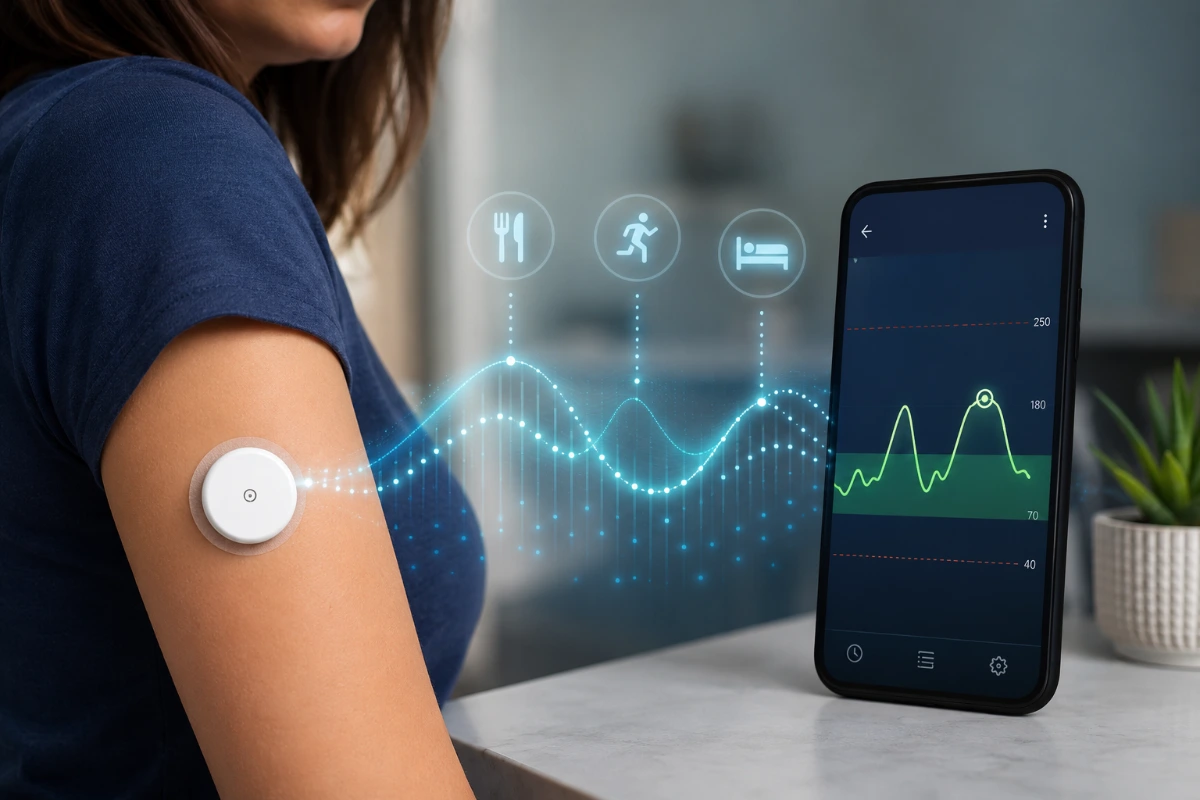
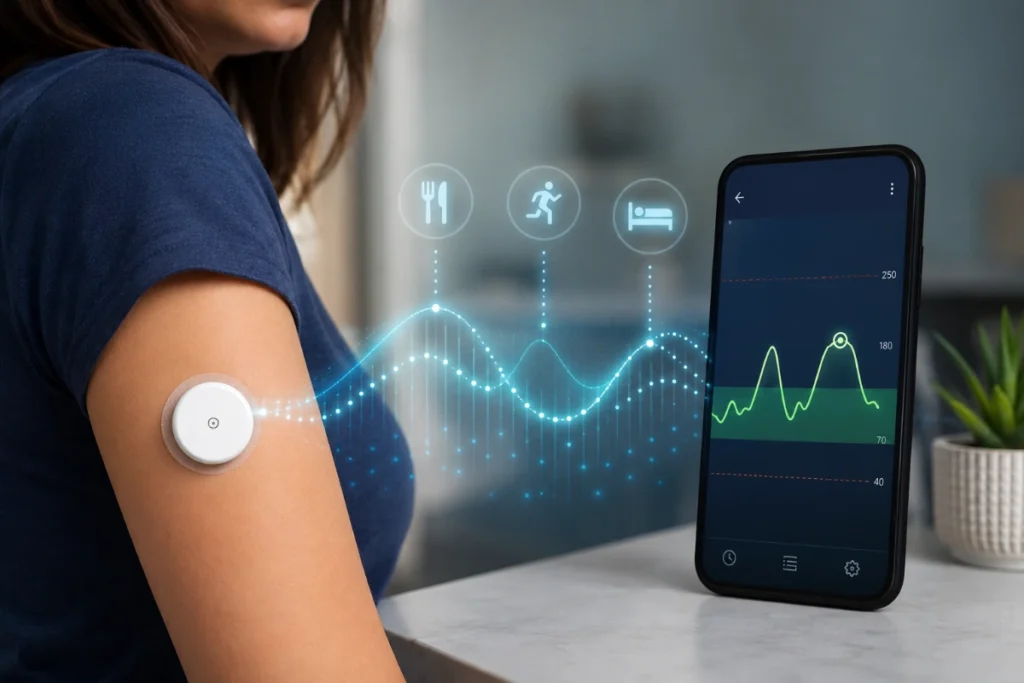
Continuous glucose monitors (CGMs) have transformed the way we understand metabolism. Instead of seeing a single blood sugar value during a lab visit, you can now watch how your body responds to meals, exercise, sleep, stress, and everyday life.
As an integrative practitioner, I love using CGMs because they help patients become curious about their own physiology.
We can identify patterns, make small lifestyle changes, and see what actually works.
Unfortunately, social media has also created a lot of fear around CGMs. People often see one glucose spike after eating fruit or oatmeal and assume they have ‘broken’ their metabolism. Others panic over an overnight low that turns out to be a compression low.
The truth is that a CGM is only useful if you understand what influences the numbers.
1. CGMs Measure Interstitial Fluid, Not Blood
2. Compression Lows
Sleeping or resting on the sensor can temporarily reduce blood flow around it and create a falsely low reading. If you feel perfectly normal, change positions and give the sensor a few minutes before assuming you are truly low.
3. Exercise
High-intensity exercise or heavy strength training may temporarily increase glucose because adrenaline signals your liver to release stored glucose. Longer aerobic activities such as walking, cycling, hiking, or easy jogging often lower glucose over time.
4. Alcohol
Alcohol can create an initial rise (especially sugary drinks) followed by delayed drops several hours later because the liver prioritizes metabolizing alcohol.

5. Meal Composition
Protein, fat, fiber, portion size, food processing, eating speed, and meal order all change your glucose response. Two meals with identical carbohydrate grams can produce very different CGM curves.
6. Stress, Sleep, Illness & Hormones
Cortisol and adrenaline influence glucose. Emotional stress, poor sleep, infections, pain, menstrual cycles, perimenopause, pregnancy, and puberty can all affect your readings.
7. Medications
Steroids are a common cause of higher glucose. Other medications can also influence readings, making context important.
8. Hydration, Heat & Sensor Age
Dehydration, heavy sweating, sauna use, and the first 12–24 hours after inserting a new sensor can influence performance.
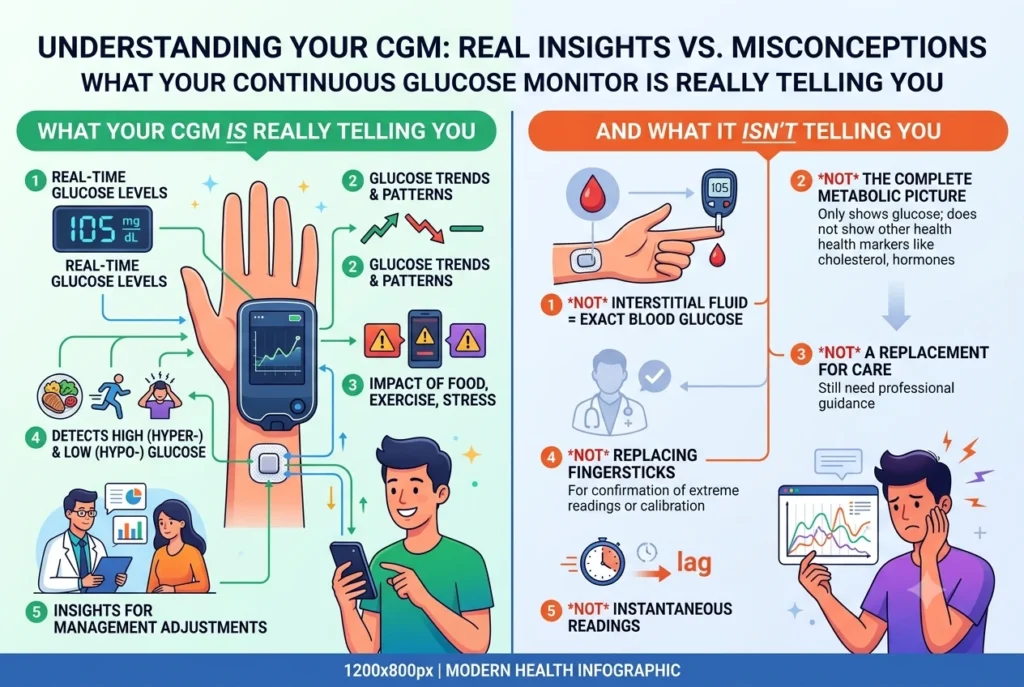
No CGM is perfect; trends are more valuable than isolated numbers.
Instead of obsessing over one number, look for patterns over several days.
Ask yourself:
- Which breakfasts keep me full and steady?
- Which meals create large spikes?
- How does walking after dinner affect me?
- What happens after poor sleep?
- How do stress and exercise influence my glucose?
These are the questions that lead to meaningful, lasting improvements.
Frequently Asked Questions
Why doesn’t my CGM match my finger stick?
Because the CGM measures interstitial fluid, not blood, and there is a normal time lag.
Is every glucose spike unhealthy?
No. Brief rises after eating are a normal part of human physiology. The overall pattern matters much more than a single peak.
Should I chase a perfectly flat glucose graph?
No. Healthy people experience fluctuations. The goal is learning your body’s patterns, not achieving perfection.
Final Thoughts
Your CGM is a learning tool—not a grading system.
The goal isn’t to create a perfect graph. The goal is to understand how your unique body responds to food, movement, stress, sleep, hormones, and everyday life. When you approach your data with curiosity instead of fear, a CGM becomes one of the most powerful tools for building long-term metabolic health.
Interested in wearing a CGM? In my practice, I help patients interpret their data in the context of their nutrition, lifestyle, hormones, and overall health. Together we identify practical, sustainable changes that support better metabolic health without chasing perfection. You can schedule an appointment through the booking page or reach out with questions