Why I Don’t Recommend Counting Calories for Weight Loss
For decades, we’ve been told that weight loss is essentially a math problem:
Eat fewer calories. Burn more calories. Lose weight.
And when that doesn’t work long-term, the assumption is often that the person didn’t count carefully enough, ate too much, or simply lacked willpower.
I think that’s an incredibly limited way to think about weight.
Your body isn’t a calculator. It’s a complex biological system designed to regulate hunger, energy expenditure, energy storage and body weight.
And that’s why, in my practice, I generally don’t recommend counting calories for weight loss.

If You’re Hungry, the Calorie Number Almost Doesn’t Matter
Let’s say an app tells you that you should eat 1,400 calories per day to lose weight.
Okay.
But what happens if you’re starving at 1,400 calories?
You can certainly decide not to eat. You can drink some water, distract yourself, go for a walk and exercise willpower.
But your brain is still receiving a very powerful biological message:
Find food.
You may be able to override that signal temporarily. But asking someone to spend months or years fighting hunger is not what I consider a particularly good weight-loss strategy.
Instead, I want to know:
Why are you hungry?
That’s a much more interesting and useful question.
Hunger Is Regulated by Hormones
We sometimes talk about hunger as though it’s a personality trait.
“She has a big appetite.”
“He just loves food.”
“I have no willpower around carbohydrates.”
But appetite is heavily regulated by your brain, digestive system and hormones.
Ghrelin helps stimulate hunger. Leptin communicates information about stored energy. GLP-1, PYY and CCK contribute to satiety. Insulin helps regulate glucose and energy storage. Cortisol, reproductive hormones and thyroid hormones can also influence metabolism, appetite and energy.
Then add sleep, stress, exercise, muscle mass, insulin sensitivity, medications and previous dieting.
Suddenly, “just eat less” starts looking pretty rudimentary.
Your body has an entire biological system devoted to determining when you should eat, when you’ve had enough and what happens to the energy you consume.
Ignoring that system and focusing exclusively on a calorie number misses a huge part of the picture.

Your Body Can Adapt When You Simply Eat Less
This is another major problem with the calorie-counting model.
If someone’s estimated maintenance intake is 2,000 calories and they begin eating 1,500, it’s tempting to assume that the resulting 500-calorie deficit will simply continue indefinitely.
Human metabolism doesn’t work quite that neatly.
With weight loss and prolonged energy restriction, the body can adapt.
Energy expenditure can decline. Spontaneous movement may decrease. Hunger can increase. Satiety can become harder to achieve. The amount of energy required to maintain a smaller body also decreases.
This phenomenon is often called adaptive thermogenesis.
This doesn’t mean it’s impossible to lose weight by eating less.
Obviously it isn’t.
It means that the body is an active participant in the process not a passive container waiting for you to subtract enough calories.
This Is Why I Care More About Macros
When I’m helping someone with weight loss, I’m much more interested in what they’re eating than whether they perfectly calculated its caloric value.
Protein, carbohydrates and fat have very different physiological effects.
Protein
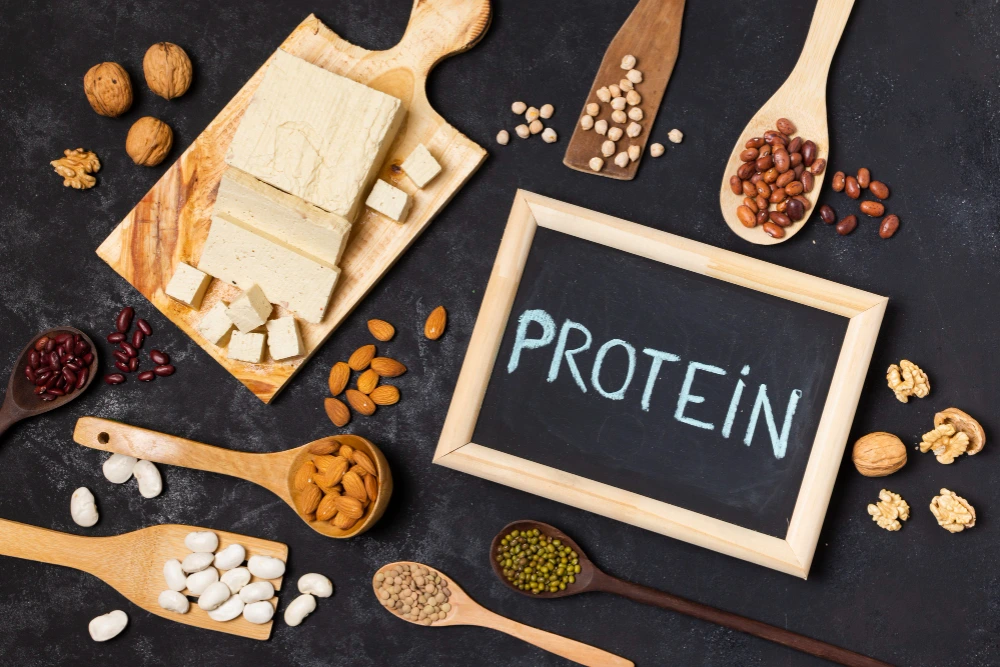
Protein is particularly important because it is highly satiating and helps preserve muscle during weight loss.
And maintaining muscle matters.
Muscle supports strength, mobility, glucose disposal and metabolic health. Losing weight while simultaneously losing significant muscle isn’t the outcome we’re looking for.
So rather than saying, “You have 350 calories available for lunch,” I’d much rather ask:
Where’s your protein?
Carbohydrates
I don’t believe everyone needs to eat a low-carbohydrate diet.
But I absolutely care about carbohydrate quality, quantity and context.
There’s a major difference between eating highly refined carbohydrates throughout the day and eating minimally processed carbohydrates as part of meals containing protein, fiber and healthy fats.
This becomes particularly important for someone who has insulin resistance, significant blood sugar fluctuations or persistent carbohydrate cravings.
Fat
Dietary fat can help make meals satisfying and enjoyable.
Olive oil, avocado, nuts, seeds, eggs and fatty fish can all fit beautifully into a healthy eating pattern.
Does that mean you should eat unlimited amounts because we’re not counting calories?
Of course not.
You can absolutely overeat anything.
But there’s an enormous difference between having some awareness of how much food you’re eating and spending your life weighing almonds and entering tablespoons of olive oil into an app.

Insulin Matters But It Isn’t the Only Hormone That Matters
Insulin has become controversial in discussions about weight loss.
On one side, you’ll hear that weight loss is entirely about calories and that insulin barely matters.
On the other, you’ll hear that insulin is the sole cause of weight gain.
I don’t think either extreme is particularly useful.
Insulin is one part of a much larger metabolic system.
When we eat — particularly carbohydrates, although protein can stimulate insulin as well — insulin rises. Among its many jobs, insulin helps move glucose into cells and signals the body to store available energy.
That’s normal physiology.
But chronically elevated insulin levels and insulin resistance are associated with metabolic dysfunction and can coexist with increased hunger, altered fuel utilization and difficulty regulating blood glucose.
Rather than obsessing about individual insulin spikes, I care about improving someone’s overall metabolic health.
That might include changing carbohydrate quality or quantity, increasing protein and fiber, exercising, building muscle, improving sleep and sometimes changing how frequently someone eats.
We Don’t Necessarily Need to Eat All Day
The recommendation to eat every few hours is another idea that deserves reconsideration.
Some people feel great eating three meals and snacks.
Others discover that constantly eating keeps them constantly thinking about food.
There is no biological requirement for most healthy adults to snack every two or three hours.
Allowing longer periods between meals — and, when appropriate, using some form of intermittent fasting or time-restricted eating — can be a useful tool for certain people.
Fasting isn’t magic, and it isn’t appropriate for everyone.
But one thing I like about it conceptually is that it changes the question from:
“How little can I eat at every meal?”
to:
“When am I actually hungry, and when do I actually need to eat?”
That’s a very different relationship with food.
Pay Attention to Hunger
One of the most useful things you can track during weight loss isn’t a calorie at all.
It’s hunger.
If you eat breakfast and you’re ravenous 90 minutes later, I want to know that.
If you eat dinner and immediately start looking for something sweet, I want to know that.
If you can’t go three or four hours without thinking about food, that’s useful information.
If you’re suddenly much hungrier after several weeks of dieting, that’s useful information too.
Rather than treating hunger as an inconvenience that needs to be ignored, we can treat it as data.
Then we can change the diet accordingly.
Maybe you need more protein.
Maybe you’re eating too many refined carbohydrates.
Maybe your meals aren’t large or satisfying enough.
Maybe you’re sleeping five hours a night.
Maybe you’re trying to maintain too aggressive a deficit.
Maybe your eating window or meal timing isn’t working for you.
Maybe there’s an underlying metabolic or hormonal issue worth investigating.
Those are much better questions than, “How many calories do you have left today?”
You Shouldn’t Have to Be Hungry All the Time to Lose Weight
I think this is where traditional diet culture has failed a lot of people.
We’ve normalized hunger as evidence that a diet is working.
I disagree.
Some hunger before meals is completely normal. But walking around chronically hungry, exhausted, irritable and preoccupied with food isn’t a successful weight-loss plan.
It’s a plan you’re eventually going to stop following.
My goal is to help people eat in a way that naturally improves satiety and makes it easier to eat an appropriate amount of food.
That means looking at:
- Protein
- Carbohydrate quality and quantity
- Healthy fats
- Fiber and whole foods
- Blood sugar regulation
- Insulin sensitivity
- Meal timing
- Sleep
- Stress
- Exercise and muscle mass
- Hunger and satiety
Could you calculate the calories in all of that?
Sure.
But that’s not where I’d start.
Stop Treating Weight Loss Like a Math Assignment
Calories are a unit of energy. They aren’t an instruction manual for human metabolism.
Yes, it is possible to consume far more food than your body needs. And if someone is regularly eating enormous portions or consuming large amounts of calorie-dense foods, total intake obviously matters.
But that’s very different from believing that successful weight loss requires meticulously tracking every calorie that enters your mouth.
I would rather help someone create an eating pattern in which their appetite becomes easier to manage.
Because ultimately, if you’re constantly hungry, I don’t particularly care that your calorie-tracking app says you’re doing everything right.
Your hunger is telling us something.
Instead of trying harder to ignore it, let’s figure out why it’s happening.
I help patients interpret their data in the context of their nutrition, lifestyle, hormones, and overall health. Together we identify practical, sustainable changes that support better metabolic health without chasing perfection. You can schedule an appointment through the booking page or reach out with questions